Tuesday, April 12, 2011

"How Do You Do That!"

Many folks ask us about the electrofishing boat and how it works. Our boat is a 16 ft X 48 in flat bottom Jon boat with a 40 hp motor. On our rig the boat itself is the ground and the booms sticking out the front with the stainless steel droppers are the positive. Some rigs use separate cables for the ground, but by using the boat, you produce a better field. The boat has a padded railing around the front deck so we can lean out and dip and not fall in. Some shocker boats have lights on them for sampling at night. Our generator puts out up to 7500 watts, up to 1000 volts, various pulses (7.5-120 per second) and amperage, and is all controlled by the Shocker Box. The settings we use depend on the objectives for sampling, the water’s conductivity and species of fish being targeted. There is a peddle, that when pushed, puts electricity into the water and a timer that keeps track of seconds sampled, which we convert into a fish per minute index. The range and depth fish are affected depends on fish species, size and water conductivity. In some waterbodies fish need to be within three feet of the outside of boom and less than four feet deep. Other times fish are stunned as far as 15 feet outside the booms, and greater than 10 feet below the surface. Some fish are completely stunned and easy to dip, while others fight the electricity and can be very difficult and impossible to dip. Research has shown approximately 0.5 % of the fish shocked die, and generally those are fingerlings and fry. All remaining fish wake up and swim away unharmed. After we dip the fish they are placed into an aerated tank, sometimes with salt, until measured, weighed and then released. After each sample the tank water is pumped out and refilled. The water temperature can rise in the tank when jammed with fish, or from the sun, fish deposit waste and some regurgitate the most recent meal in the tank is why it is changed so frequently. Generally larger fish get hit harder (shocked) than smaller ones as they have more surface area to transmit electricity and occasionally take longer to wake up. Most fish by the time we measure and weigh are eagerly ready to swim away. No one has ever been killed as far as I know from electrofishing, but if you touch the water and the boat simultaneously when the peddle is down, you will feel it. If the water is highly conductive, the shock is very mild, but if the water is very soft and has very low conductivity the volts are high, even though the amps produced are low, and you will really feel it. We always wear rubber soled shoes and the deck and in front of the driver’s seat has a rubber mat for additional insulation. Sometimes we use one dipper and sometimes two. The driver always wears ear protection and sometimes the dippers too, and we use 6-8 ft long handle dip nets. If we are targeting catfish, the net webbing may be rubber to eliminate their spines getting tangled in the traditional green nylon nets.


The shocker can affect turtles, snakes, alligators, birds and even manatees. If we encounter a non fish animal, we simply release the peddle and allow it to get away and we resume. The larger the lizards, the more thrashing they do. I have seen them up to about 12 feet get shocked and those are dangerous that close, especially to the driver. Gators have a tendency to try and climb into the back of the boat by the driver. That makes it interesting during night sampling. The guys in the front think its funny, but when you see teeth and that front foot coming at you out of the dim light, it scares you know matter how used to it you are! Manatees also cause a threat as they can literally flip the boat if they are in shallow water. My first month on the job we were electrofishing on the St Johns near Titusville and in the front of the deck a huge swirl and the water dropped about a foot, before this 10-11 footer threw his head between the railing and onto the boat deck. Being from Missouri, that was first really scary then was pretty cool!

The term Monkey Rig is frequently used when describing illegal electrofishing. Those were specifically used for catfish and most were built from the old crank telephone generator. The reason it works so well on catfish is it is low amperage, medium volts, but low pulses per second, which catfish are very susceptible to. When I did my catfish research on the St Johns in the late 80’s and early 90’s we actually abandoned the modern day shocker and used an old telephone rig we built in some areas of the study, and it was amazing how many catfish were in any stretch of the river.

Below are a few photos of the inside and setup we use.


The action is not always fast paced, and sometimes it is a wait for the fish to float, or to even find them!

You can see how crowded the boat can get even for the driver with all the equipment in the boat.

Smaller boats are better for smaller water, but bigger boats are best for big waterbodies especially if bad weather or winds pop up.

Clean, cool aerated water in the tank keeps all the fish in good shape while waiting to be measured, weighed and released.

Tuesday, April 5, 2011

Photos from The Weekend!

We were working for a new client this weekend in Northeast Florida, where the wildlife runs abound.  here are a few photos from us working and the wildlife we saw while on the property.


A 8.9 lbs largemouth bass, measuring 24 inches!


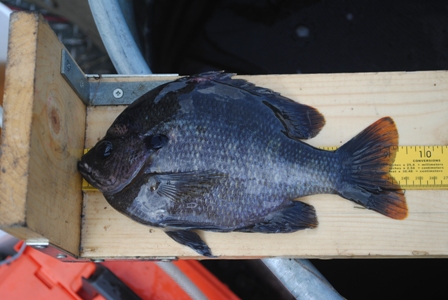
A 10 inch bluegill is quality in anyone's book!


A Boss Gobbler looking for love!


Friday, April 1, 2011

Electrofishing The Faver Lake

We electrofished the Faver Lake owned by good friend and Outdoors Show founder Captain Kevin Faver.  Kevin and his son Colton did a great job dipping fish as they dipped about 150 largemouth bass, bluegill and redear sunfish with a few black crappie, warmouth and golden shiners mixed in 12 minutes of peddle time. In other words they were working and worked up a sweat! The largemouth and all other fish were more plentiful than two years ago, and now the bass need to be thinned to promote growth of the fish remaining. It appears there is plenty of food for bass under 10 inches and over 18 inches, just not much available for the middle size individuals, which is typical for a waterbody with little bass harvest. We will be stocking some additional forage and Kevin will be having more fish fries with bass 12-16 inches in length this year. We will also be gathering additional lengths & weights during the shiner fishing tournament between the Favers and Schulte's in a couple weeks to varify the larger bass have plenty to eat, but I am betting they do from the electrofishing sample. But we always like to combine hook & line data with electrofishing results to get the best picture possible of what is really going on under the water!


Kevin & Colton after some heavy fish dipping competition!

Too many small bass!

Sometimes a starving fish's mouth isn't as big as its stomach thinks!

Warmouth, Redear Sunfish and Bluegill

Thursday, March 31, 2011

Spring is Here


The Winter sample is complete and we have started the Spring sampling in the St. Johns River. Water and air temperature were chilly and our catch rates were low in January and early February. Often we were the only people on the river. What little catch we did have however did attract a crowd....


This group followed us to every sample site for 20k of river, looking for a free meal.

Both Otter Trawls needed repairs after catching old crab traps. They have been repaired and are ready for the spring sample.


We installed a fountain with lights for The Retreat of Clay County in early January. It is a small pond at the entrance to the development. The fountain looks great, and attracts attention both day and night.


Looking forward to the busy spring and some warm weather. Most water temperatures are over 65 degrees and great for fishing. Many species are beginning to spawn and catch rates should increase as fish become more active. We encourage you to utilize the aquatic resources in your communities and we recommend you practice catch-and-release in stormwater retention ponds.

Hope you have an opportunity to enjoy some time on the water or in the woods.


Tuesday, February 22, 2011

Hard to Believe this is Central Florida!

These photos were taken on a 10,000 acre tract of land in Central Florida, just a stones throw from the Rat Trap (Disney). This property has a 1,600 acre lake we are working on. It is incredible to be on the lake at daylight or dusk, with no sounds but nature. The buck in this photo is not the biggest we have seen to date. Sunday evening I saw his older brother with the same rack shape, maybe a hair wider, a lot heavier beams and G's and ten points instead of eight. He slipped into the woods before I could get my bigger camera lens on. The property has not been hunted or fished for 10-15-20 years, and may never be again, but it will also never get developed, so that is nice to hear. Kind of refreshing since Florida cannot get paved fast enough to suite some people!

1) What Florida lakes used to look like!


2) It is hard to believe this one is not the biggest we have seen!


3) This turkey has probably never heard a human call during hunbting season, no call shyness here!


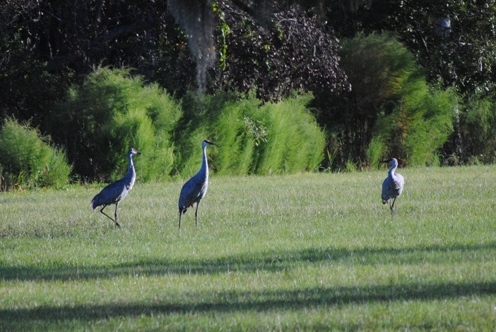
4) Sandhill cranes.


5) A couple gents out for an afternoon walk in the warm February Florida sun!

Doing Some Largemouth Bass Resaearch!

I was electrofishing a 1,600 acre private lake in St Cloud (Osceola County), Florida this past weekend. Besides a general lake evaluation we are doing separate largemouth bass research and monitoring so it was three days of dipping bass. We weighed and measured approximately 280 bass. We did dip a few other fish that were exceptional. There is definitely a forage gap for bass in the 14-20 inch size classes, notice the big head and sunken belly. The larger and smaller bass appeared to be fat and happy. Water temperature was about 65 degrees F, and they will be spawning when it gets to around 68 or so. The black crappie were all in the Maidencane spawning already.

1) Laergemouth bass weighing 8.5 lbs.


2) Redear Sunfish weighing 1.75 lbs, 12 in. total length.


3) Bluegill weighing 1 lbs.


4) Typical Largemouth Bass shape when not enough forage (food) is present


5) This "Lizard" slipped in behind us and grabbed a catfish for lunch!

Tuesday, January 18, 2011

Happy New Year!


Happy New Year!

Hope you had prosperous 2010. Wish I had made more time to sit in the woods or on a duck pond this past year. No need to list the excuses I have convinced myself are legitimate, but I promised myself I will make the most of opportunities when they arise in 2011. Over the Christmas break I did visit Smokey Mountain National Park in TN and saw some great wildlife and lots of snow.


I installed a much needed floor in my boat and completed some other minor equipment repairs in preparation of a busy 2011.


Already this year we began work on the St. Johns River, collecting the winter quarter electrofishing sample. Water temperatures were in the low 50’s but we still managed to find some big ones, like this 9lb Largemouth.


Sampling begins this week with trawls and hoop nets. I will let you know how we do.